Tech Blog

Technology

MongoDB Atlas – Atlas Search

By Mamta Bopaliya2 min read
← Back to blog

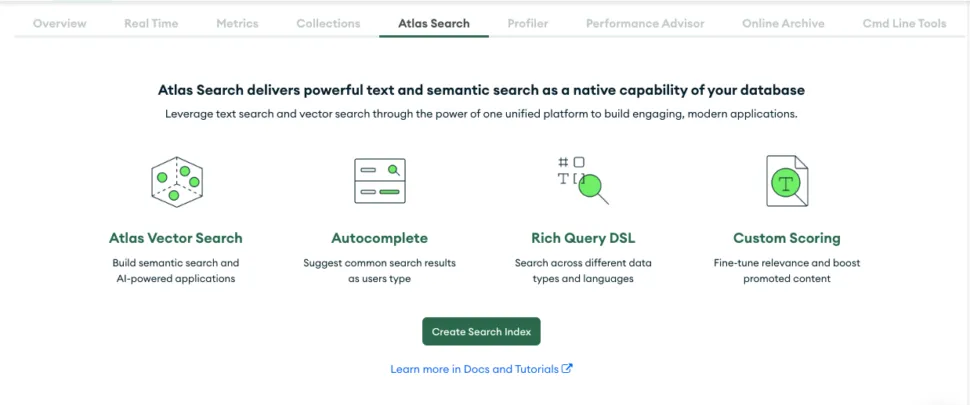
Atlas Search provides powerful text and semantic search as a native capability of our database. Using this we can build applications 4x faster with  77% lower cost than alternative search solutions.

Why Atlas Search?

  • Workload isolation
  • Better performance (40% – 60% decrease in query execution time for complex queries in application)
  • Higher availability
  • Improved developer experience
  • Seamless integration with our existing DB setup eliminates the need to stand up and manage a separate sync mechanism
  • You can search on the entire table or for a specific field of table collection.

How to configure?
We can configure Atlas Search on the MongoDB collection.

  • Login to MongoDb Atlas
  • Select your project (or create new project)
  • Go to Database
  • Select your cluster (or create new cluster)
  • Select DB and collection (or create collections and tables)
  • Go to Atlas search and create Search Index
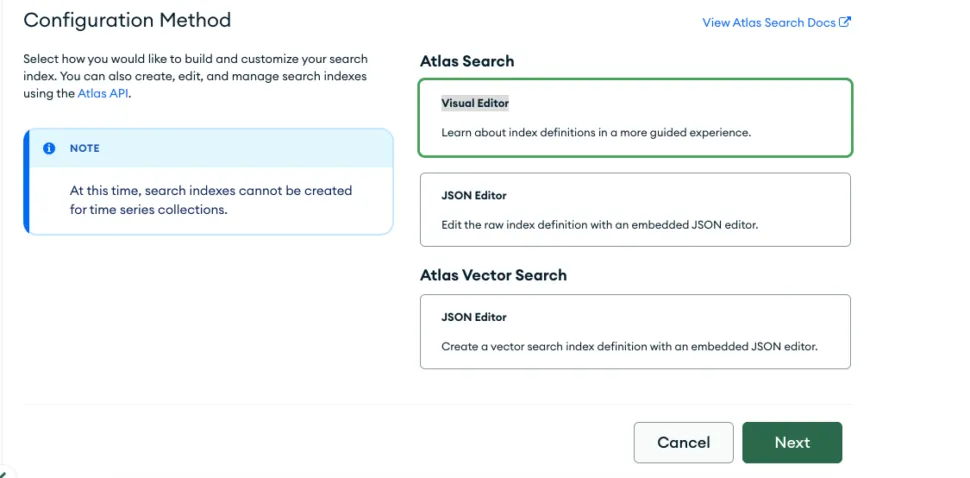
  • Select Visual Editor
  • Click on Next
  • Enter Index Name and Database and Collection
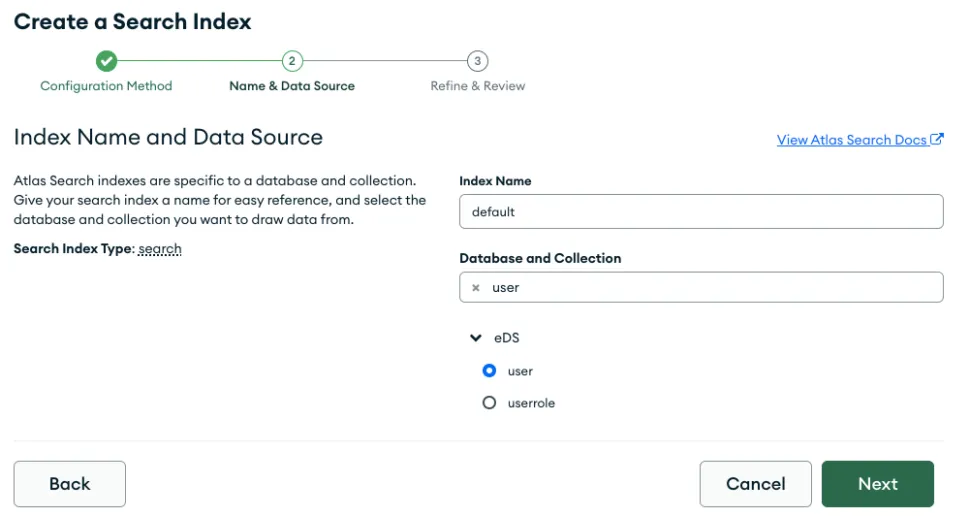
  • Click on Next and Create Search Index
  • For more details you can refere video link

What is the limitation?
There are some limitation apply to Atlas Search on M0, M2, and M5 clusters only:
You cannot create more than:
– 3 indexes on M0 clusters.
– 5 indexes on M2 clusters.
– 10 indexes on M5 clusters.
You can create unlimited number of indexes on M10+ clusters. For more details please refer limitation


Keep reading

You may be interested in

Browse all articles →
Using SCEP Certificates with Okta and SureMDM for Zero Trust Security
August 5, 20257 min read

Using SCEP Certificates with Okta and SureMDM for Zero Trust Security

For businesses embracing zero-trust principles, secure certificate-based authentication isn’t just nice to have—it’s a necessity. With Okta as your Identity Provider (IdP) and SureMDM as your unified endpoint management solution, you can now seamlessly distribute and manage device certificates using Simple Certificate Enrollment Protocol (SCEP). This blog will guide you through: Why Use SCEP with […]

By Sunny KumarRead More →
How to Use mc CLI for Bucket Management and Credential Setup
June 12, 20252 min read

How to Use mc CLI for Bucket Management and Credential Setup

MinIO client The MinIO Client, commonly known as mc, is a command-line tool used to interact with MinIO, a high-performance object storage system. The mc client allows users to manage buckets and objects on the MinIO storage service.

By Malkeet SinghRead More →
How to Setup Passwordless SSH Login for ADE
March 18, 20253 min read

How to Setup Passwordless SSH Login for ADE

To set up a passwordless SSH login in Linux all you need to do is to generate a public authentication key and append it to the remote hosts ~/.ssh/authorized_keys file. The following steps will describe the process for configuring passwordless SSH login: 1. Check for existing SSH key pair Before generating a new SSH key […]

By Mohan Kumar KMRead More →